Primer
Population Ageing in High-Income Countries: A Primer
Why populations are ageing, how ageing is measured, what it means for pensions, health care and labour markets — and what policy can and cannot change.
Focus area 02
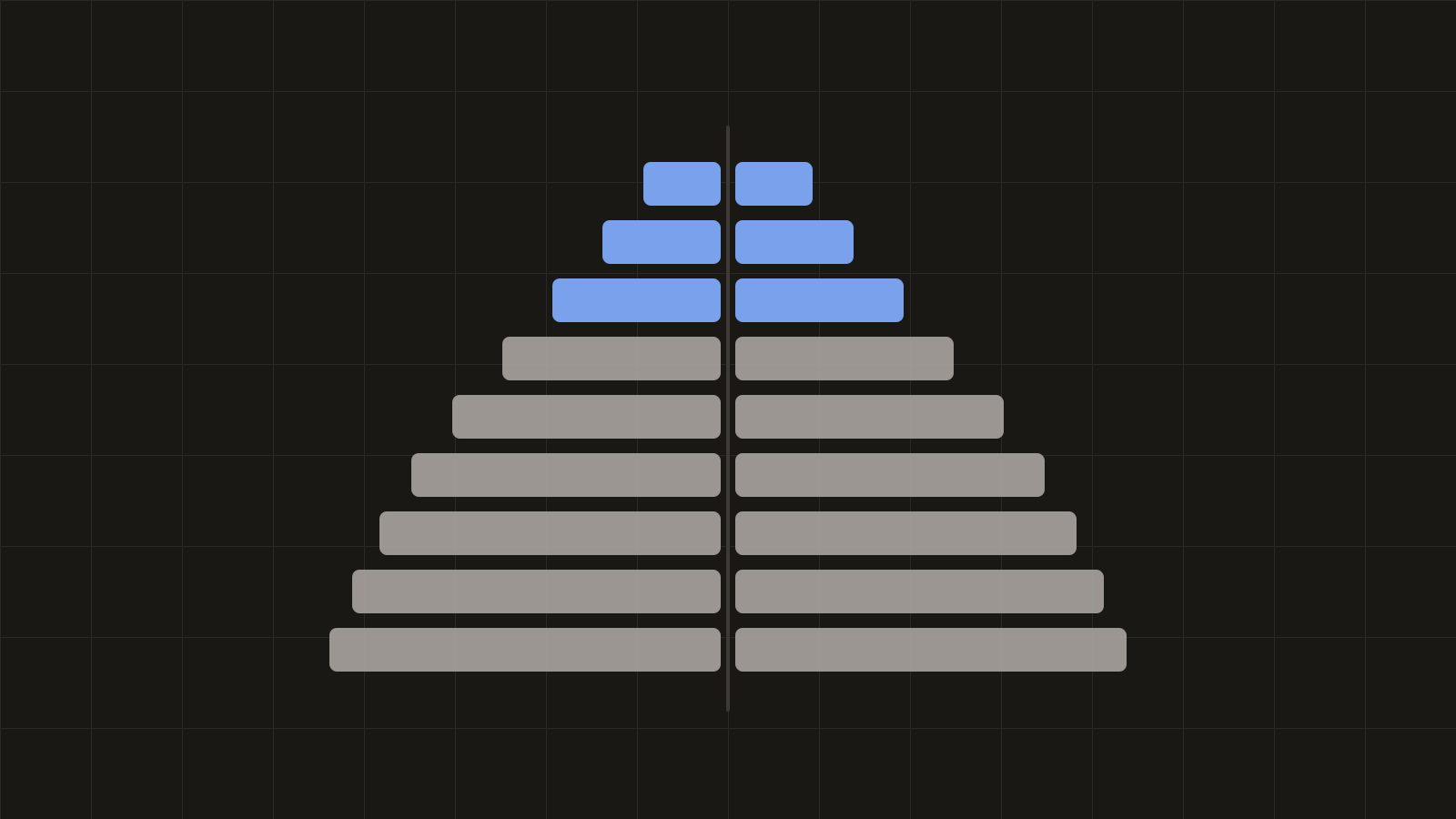
Demographic research studies how populations change in size and structure through births, deaths, and migration, and how indicators such as the old-age dependency ratio, median age, and total fertility rate describe those changes.
Most high-income countries — and a growing number of middle-income countries — are ageing: people live longer and have fewer children than in previous generations. The consequences reach pensions, health care, labour markets, and public finances.
Demographic claims are unusually easy to misstate, because small definitional choices (which ages count as “working age”, which fertility measure is used) change headline numbers substantially. This programme explains the standard indicators and the mechanics behind population projections.
Primer
Why populations are ageing, how ageing is measured, what it means for pensions, health care and labour markets — and what policy can and cannot change.
Insight
Unemployment, poverty, migration: in each case, the definitional choice — not the data collection — often determines the headline.